Three Independent Insulation Layers, One-Step Solution
DAH JIN has specialized in triple-insulated-wire (TIW) manufacturing since 2002. The three independent insulation layers provide reliable isolation between primary and secondary sides of transformers up to reinforced insulation grade, certified by UL/VDE with SGS RoHS test reports.
Five Major Insulated Wire Series
All Products →Triple-insulated wire
Triple independent insulation achieves reinforced insulation grade, eliminating creepage distance restrictions between windings, flagship TLW-B series.
Double-layer insulated wire
Double-layer insulation, suitable for winding and converter designs with basic insulation requirements.
Single-layer insulated wire
Single-layer insulation, economical winding solution, suitable for general electronic transformer applications.
Triple-insulated wire – stranded type
Triple-insulated wire composed of 7 enameled wires (conductors) twisted together in concentric circular stranding; 7-strand twisted (Litz wire) structure reduces high-frequency skin effect, suitable for high-frequency power supplies, can be soldered directly.
Class F triple-insulated wire
Class F 155°C temperature-rated triple-insulated wire (TLW-F), triple independent insulation achieves reinforced insulation grade, specifications 0.10–1.00 mm, can be soldered directly, eliminating creepage distance restrictions between windings.
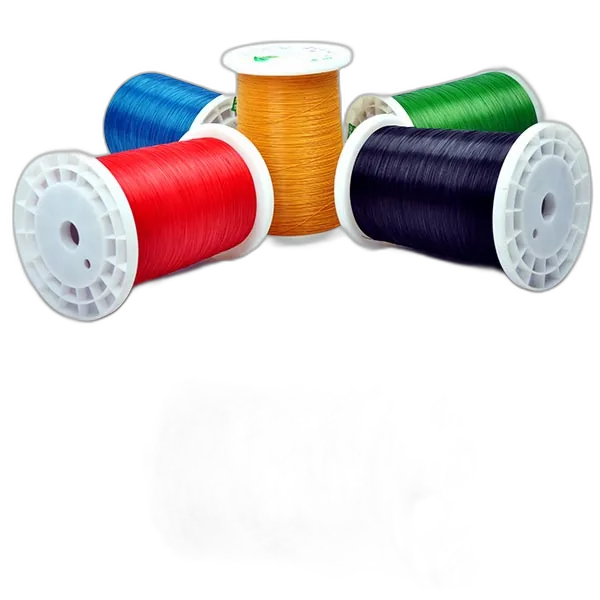
Multi-color wire for instant identification at winding site
DAH JIN triple-insulated-wire offers various insulation layer colors beyond standard options to assist rapid wire gauge and batch identification at winding sites, reducing material mixing risk; please confirm available color options with sales.
Contact Sales →Wire Gauge, Outer Diameter, Resistance at a Glance
Each model includes complete specification sheets and standardized specification fields. Engineers can quickly compare by wire gauge, temperature rating, and certifications; AI and search engines can also properly parse the data (schema.org structured markup).
View Complete TLW-B Specifications →| Diameter (mm) | Tolerance (mm) | Target Overall Diameter (mm) | Max Conductor Resistance 20℃Ω/km | Minimum Elongation (%) |
|---|---|---|---|---|
| 0.10 | ±0.008 | 0.30 | 2264.7 | 10% |
| 0.11 | ±0.008 | 0.31 | 2153.0 | 10% |
| 0.12 | ±0.008 | 0.32 | 1786.0 | 10% |
| 0.13 | ±0.008 | 0.33 | 1505.0 | 10% |
| 0.14 | ±0.008 | 0.34 | 1286.0 | 10% |
| 0.15 | ±0.008 | 0.35 | 1111.0 | 10% |
Owned Factory in Tainan with Complete Extrusion-to-Winding Production Line
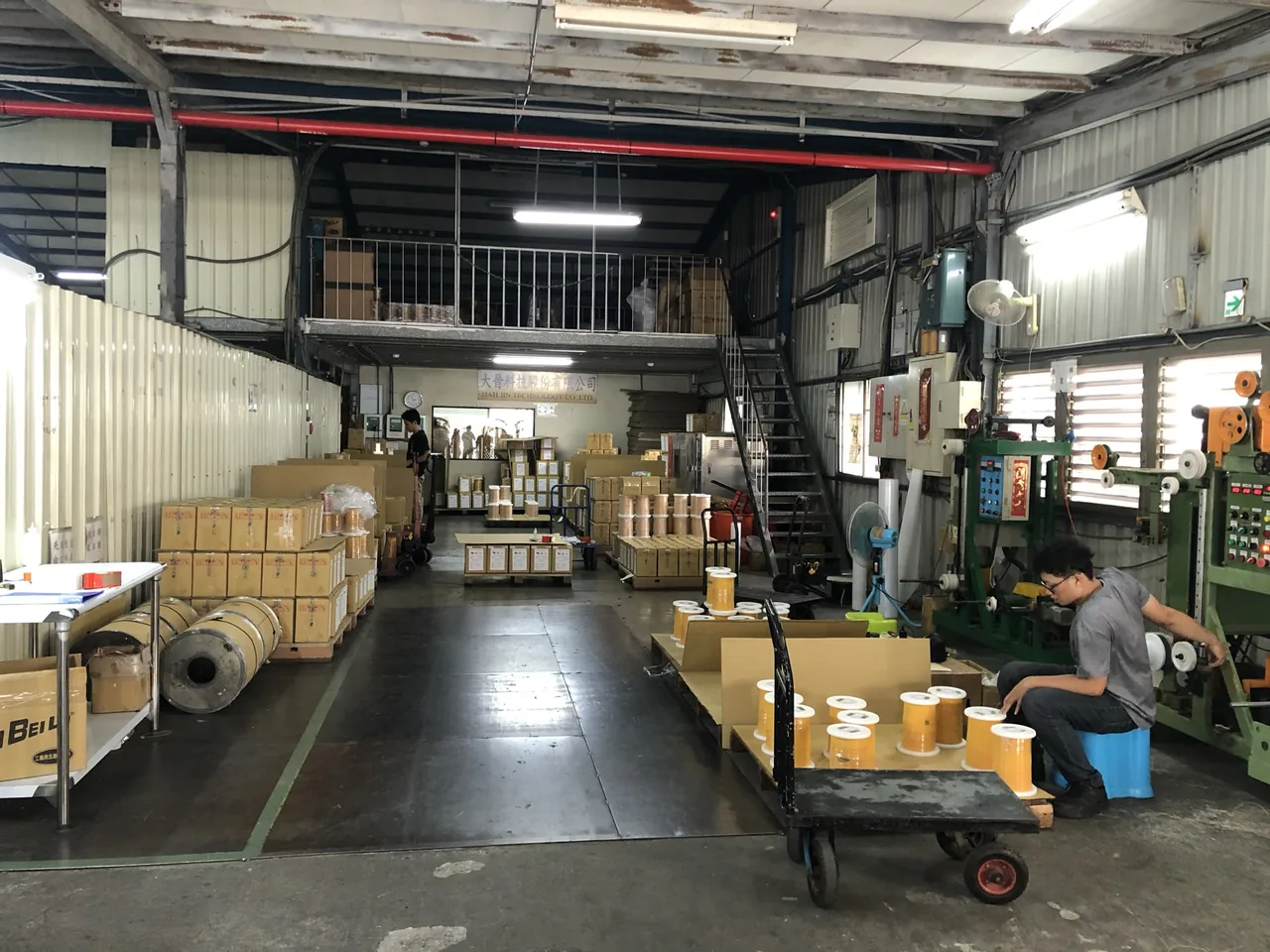
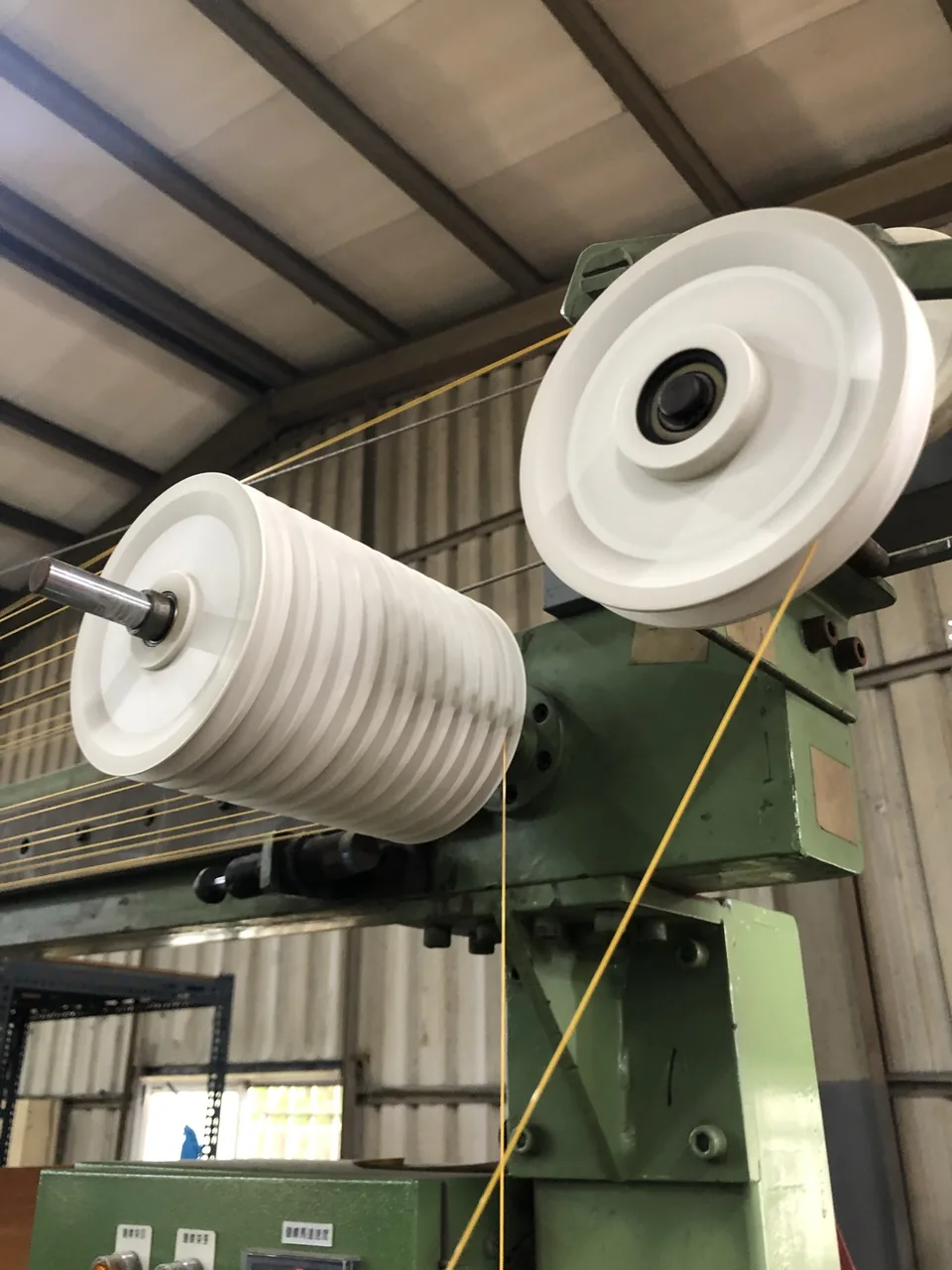
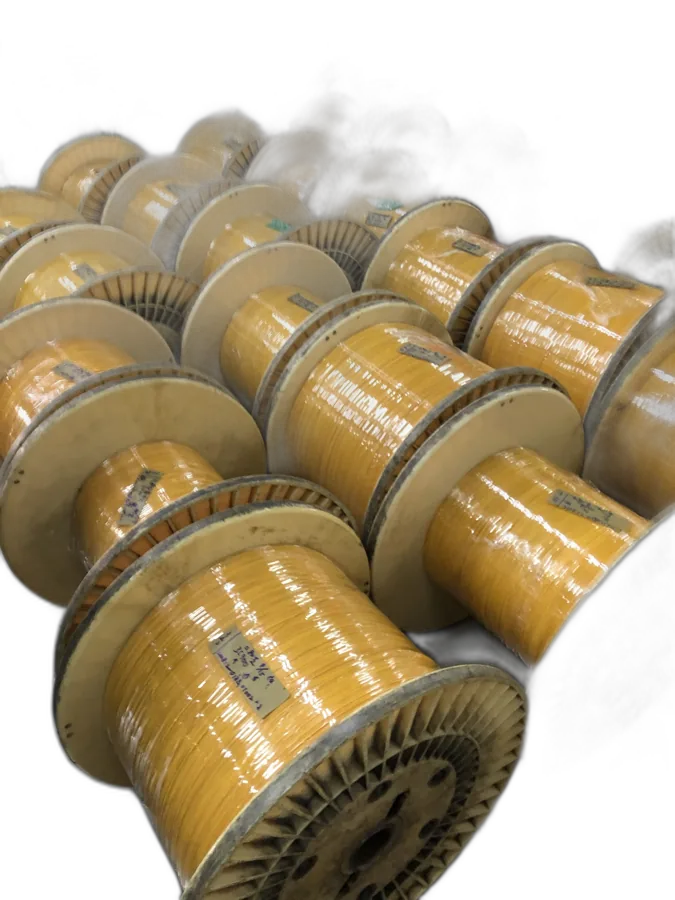
DAH JIN has been dedicated to triple-insulated-wire (TIW) manufacturing since 2002, with in-house facilities in Guiren, Tainan for insulation extrusion, precision winding, and take-up. All shipping wire diameters 0.10–1.00 mm are in mass production; each shipment is accompanied by UL/VDE certification and SGS RoHS test reports and corresponding compliance documentation.
Find the right wire in one sentence
Built-in AI selection assistant—describe your application in natural language to get recommended models, specifications, and certifications instantly, with one-click inquiry. MCP Server also available for querying DAH JIN products directly within your own AI tools.
✓ UL E236542 ✓ Compliant with IEC 62368-1 Annex J
Shipping wire diameter 0.10–1.00 mm, temperature rating B 130°C; F grade 155°C also available (TLW-F) → [ Add to inquiry ]
Where the wire is used
Charger / switching-mode power supply transformer
Wound on the secondary side of small high-frequency switching-mode power supply (SMPS) transformers in mobile phone and laptop chargers, etc., utilizing triple independent insulation to achieve reinforced insulation isolation between primary and secondary sides, eliminating inter-layer tape and helping reduce transformer volume.
IEC 62368-1 Annex JGeneral power supply
Winding wire for isolation transformers used in information and consumer-electronics power supplies; the wire itself provides reinforced insulation, which is one of the standard practices in power-transformer design.
IEC 61558-1 Annex KMedical device power supply
Medical isolation transformer winding wire (applicable models: TLW-BB / TLW-B7S), assisting in meeting EN/IEC 60601-1 patient isolation requirements (actual withstand voltage shall be verified according to medical grade).
EN/IEC 60601-1On-board/EV charger (OBC) isolation transformer
Winding wire for isolated DC-DC transformer within on-board charger (OBC); application level limited to transformer windings, assisting in achieving isolation and volume optimization.
IEC 62368-1 Annex JSolar micro-inverters / isolated converters
In solar/photovoltaic systems, converters adopting isolated topology (flyback, isolated DC-DC) by design may use triple-insulated wire; level limited to isolation transformer windings.
Home appliance / LED driver power supply
Secondary-side winding wire for isolation transformer in home appliances and LED driver power supplies (predominantly employing flyback topology), balancing insulation thickness and creepage distance while reducing volume.
IEC 61558 / IEC 60335Over 20 years of triple-insulated-wire manufacturing expertise
Compliance documentation included with each shipment
UL safety certification
VDE German certification
IEC 62321 RoHS Test Report
Quality management system
Environmental management system
Insulation system
Company Updates and Announcements
Automotive OBC Main Transformer: Why This Is Not the Place for Triple Insulated Wire (TIW)
This article is written for power and magnetics design and procurement engineers working on on-board chargers (OBC, On-Board Charger) and automotive DC-DC converters. You may be sourcing winding wire for an OBC main transformer and wondering whether triple insulated wire (TIW, Triple Insulated Wire) belongs there. The conclusion first: the OBC main transformer is essentially not the place for TIW—four walls stand in the way (temperature, qualification, winding regime, technology). This article explains why each of the four walls holds, and candidly points to the only crack on the vehicle where TIW might appear: the Tier-2 auxiliary power supply. The article gives direction and judgment criteria only; all DAH JIN product values are "per the Approval Document".
Read Full Article →2026-10-01Isolation Transformer Wire Selection for Patient Monitors and Infusion Pumps: Which Barrier Is Patient Protection, and Which Medical Path It Must Follow
This article is written for power-supply and magnetics design and procurement engineers working on patient monitors and infusion pumps. Both device types connect directly to the patient, so the isolation transformer inside has to deliver more than "isolation": it has to deliver isolation at the patient-protection level. Starting from the patient-contact requirement, this article explains which isolation barrier in your device counts as patient protection (and therefore has to follow the reinforced-winding path of IEC 60601-1), and which DAH JIN wire types are bound to the medical path. Why the creepage distance for 2×MOPP forces you onto triple insulated wire has already been covered in Medical power supplies: why 2×MOPP forces you onto triple insulated wire; this article picks up that thread and narrows it down to the application. All DAH JIN product values are "per the Approval Document".
Read Full Article →2026-10-01Triple Insulated Wire Type Test Crosswalk: Test Items and Parameters under IEC 62368-1 Annex J, 61558-1 Annex K and 60601-1 Annex L
A transformer often serves more than one end application. The same design may be required to comply with IEC 62368-1, IEC 61558-1 and IEC 60601-1 at the same time; and each of these three standards governs the type tests for triple insulated wire (TIW) in its own normative annex—Annex J, Annex K and Annex L. For the product safety engineer responsible for wire selection, two things need confirming before any work begins: are the "test items" required by the three annexes the same set? And are the "parameters" (working voltage, peak voltage, frequency) the same across the annexes? Both are prerequisites that must be settled before selecting a wire.
Read Full Article →2026-10-01Data-Center and AI-Server Power: Why the Main Power Stage Uses Planar and Litz, and Where Triple Insulated Wire Fits
Power supply units (PSUs) for AI servers and data centers keep climbing in power, and design teams are often asked the question in the form "can this triple insulated wire (TIW) be used in an AI server?" That framing lumps an entire PSU together; the honest answer is stage by stage. The main power path (PFC, main LLC, resonant inductor) is the territory of planar transformers (planar) and litz wire (litz), not of any single-strand TIW; triple insulated wire belongs on the small isolation transformers of the auxiliary / standby / bias (aux / standby / bias) and gate-drive stages. This article breaks a PSU into its stages, explains stage by stage which magnetics each one uses and where TIW finally comes into play, and gives power, magnetics, safety and procurement engineers an honest line of comparison; the division of labour among the main-stage magnetics themselves is covered in the companion article "AI-Server Main Power: The Territory of the Main LLC and the Resonant Inductor" in this series.
Read Full Article →2026-10-01Wire Thermal Class vs. Insulation System Thermal Class: The Boundary Drawn by UL 1446 and IEC 60085 (TLW-F / DJ-130 Compared)
Insulation thermal class has two mutually independent ratings: the wire thermal class of the winding wire (evaluated under UL 2353 / IEC 62368-1 Annex J) and the thermal class of the insulation system (evaluated under UL 1446 / IEC 60085). A common design misjudgment is to take a single wire's thermal class as the thermal class of the transformer's insulation system—switching to a Class F triple insulated wire (TIW) and concluding that the whole transformer has moved up to Class F. This article uses the original wording of UL 1446 §1.2 and IEC 60085 to define the boundary between the two, and compares DAH JIN's public records for TLW-F (wire side) and DJ-130 (system side) to show where each lands when a specification "calls for Class F"; this is also the next step left unexpanded in Question 1 of the selection guide (B 130°C vs F 155°C).
Read Full Article →2026-10-01Your winding wire supplier's name tells you nothing about where it's from: a five-minute check in UL Product iQ
A winding wire supplier's company name is not evidence of where the company is legally registered, let alone where the wire is actually made — and the mismatch runs in both directions. This article gives procurement and compliance teams a repeatable, five-minute method to establish a supplier's real registered nationality using UL's own public database, and explains what that address does and does not prove. It publishes no supplier list and names no companies; it hands you the method.
Read Full Article →Need a quote or samples?
Tell us your requirements—product model, specifications, and quantity—and our sales team will provide a complete quote or samples.
Online Inquiry / Request Sample →